


The All-Russian Congress of the School of Culture and Sport was held for the first time in Ufa and brought together representatives from 52 regions.
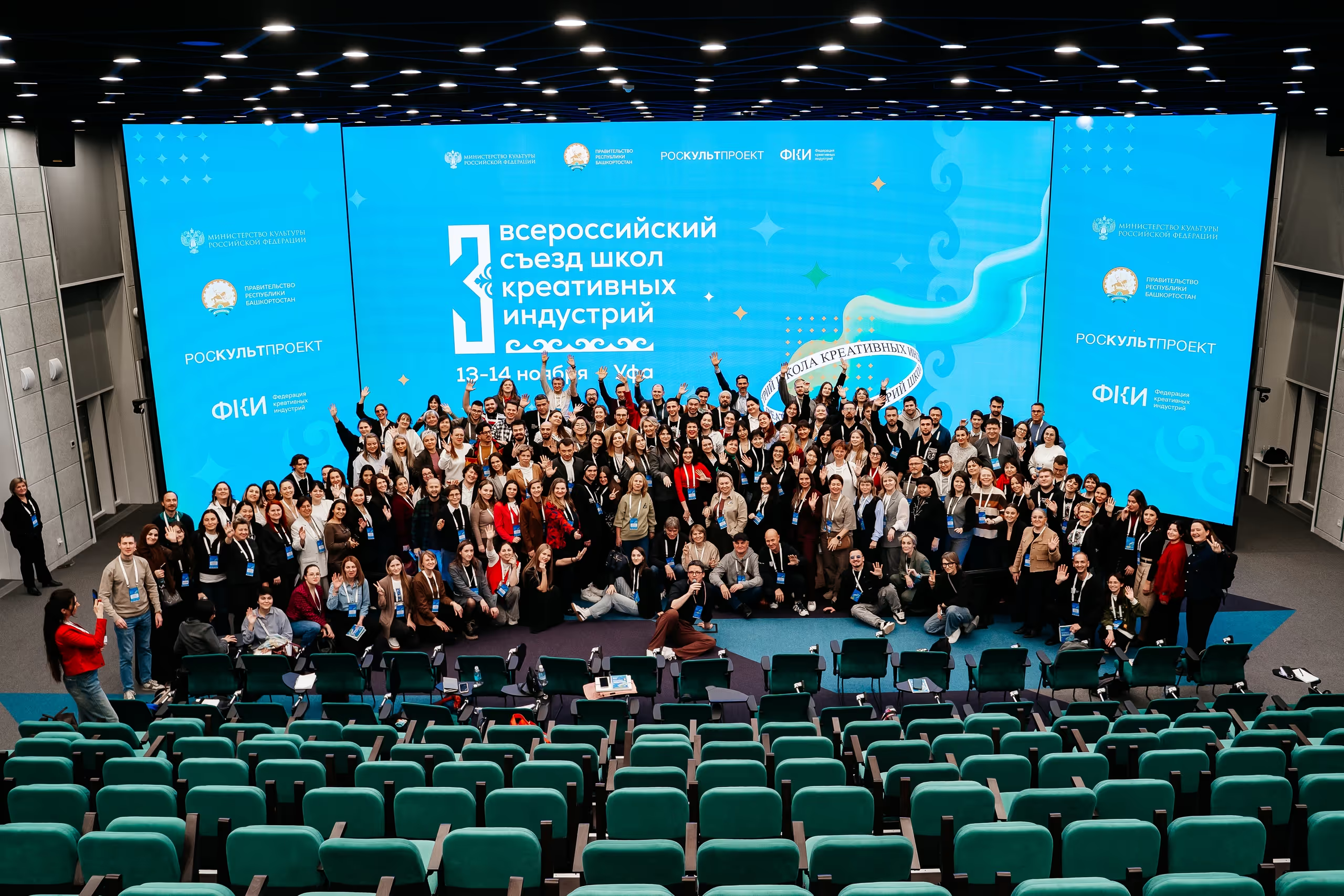
The results of the 3rd All-Russian Congress of Schools of Creative Industries (SCSI) were summarized in the capital of Bashkortostan. For the first time, a federal-level event was held outside of Moscow, confirming Ufa and the region's status as one of the emerging centers of gravity in the creative industries.
The event, organized by the Ministry of Culture of the Russian Federation, the Government of the Republic of Bashkortostan, and the Federation of Creative Industries, brought together 174 SCSI directors and teachers from 52 regions of the country, along with federal experts and speakers.
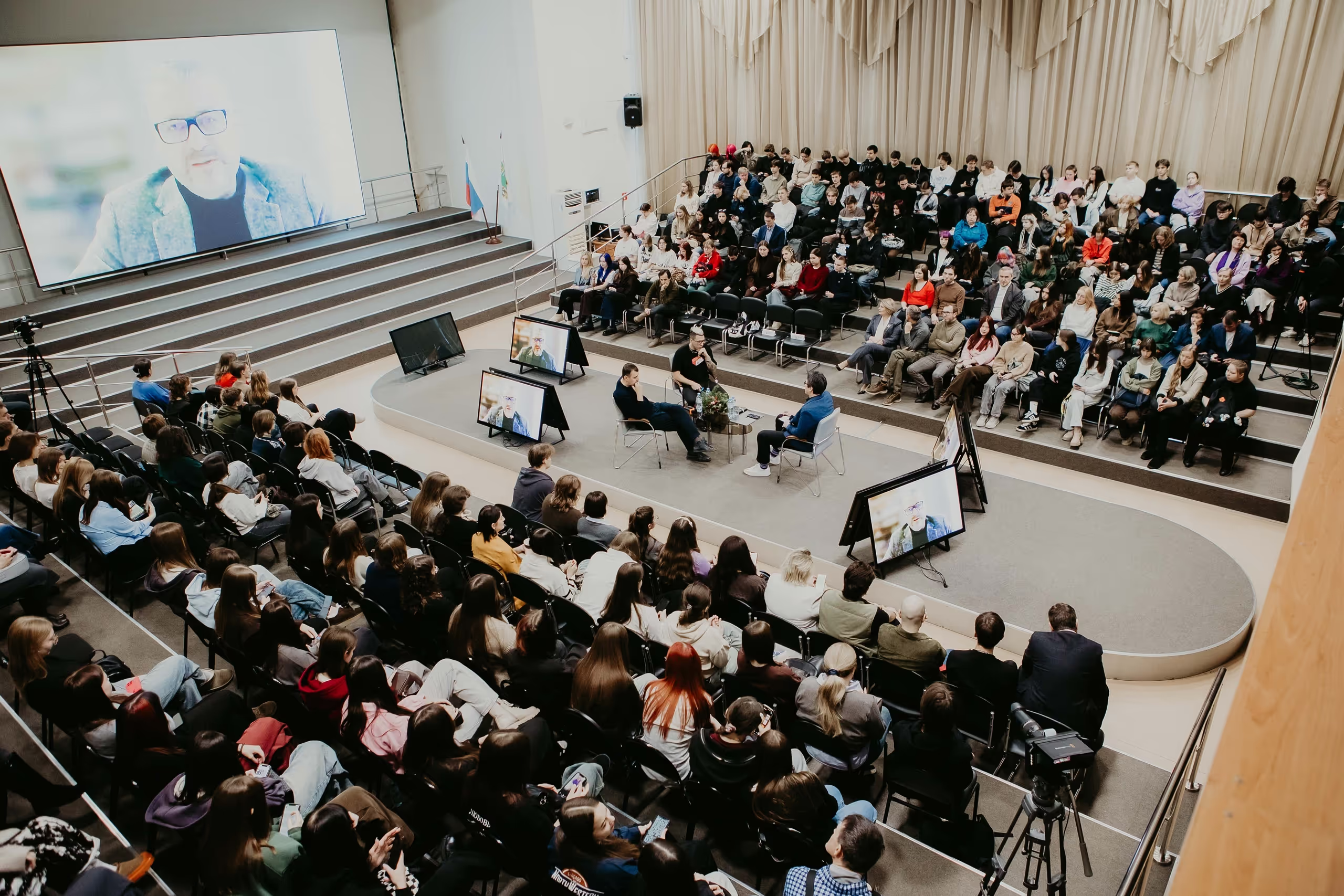
On the first day of work at the Genome Center of the Eurasian Scientific and Educational Center, a packed program awaited participants. The plenary session was attended by Ural Kilsenbaev, First Deputy Prime Minister of the Government of the Republic of Bashkortostan; Maria Guskova, General Director of the Center for Cultural Strategies and Project Management of the Ministry of Culture of Russia; and Acting Director of the Center for Cultural Strategies and Project Management of the Russian Federation. Dmitry Sidorov, Rector of the Moscow State Institute of Culture; Kirill Kirilov (Kemerovo) and Elvira Dorzhieva (Ulan-Ude), Directors of Creative Industries Schools; and Valentina Ilyina, Head of Education at the Creative Industries Laboratory at the Skolkovo Moscow School of Management. The participants emphasized that creative industries schools are now becoming a magnet for young talent and a catalyst for developing creative competencies in the regions.
Following the plenary discussion, the participants delved into the world of Bashkir animation, spoke with the group AY YOLA about ways to update and promote ethnic music, and examined case studies of creative industries schools from Sibay, Khanty-Mansiysk, Volgograd, Kinel, Engels, and Sovetsk.
The day's program concluded with an inspiring interactive session on creative production by Igor M. Namakonov, CEO of the Federation of Creative Industries.
The second day focused on practical solutions: how to implement AI in education, how professions are being restructured, and which competencies are becoming key. Speakers from Alfa-Bank, ITMO, and Giga School shared their working tools.
A significant part of the program was the presentation of the initial results of the Council of Creative Industries Schools, including the creation of a unified methodological framework combining educational standards, tools for interaction with the industry, and school best practices, as well as a mentoring program and educational webinars aimed at enhancing the professional competencies of teachers.
Open professional dialogues among educators and the opportunity to discuss in detail various approaches to teaching in areas such as design, animation, interactive technologies, photo and video production, and sound engineering generated great interest. Participants noted that such discussions allow them to see the work of the School of Cultural Heritage through the eyes of different regions and encourage a rethinking of pedagogical practices.
The business program concluded with a presentation by Olga Chembaeva (MTS Live), who spoke about marketing tools that make large-scale projects truly visible.
At the closing ceremony at the Bashkir State Puppet Theater, the results of the All-Russian "Chronicles of Time" competition were announced and the winners were awarded.
"The Third All-Russian Congress of Creative Industries Schools (SIS) yielded many new announcements from partner companies, identifying new areas for network development, including the growing role of creative producers in the educational process, the creation of distributed creative teams from different SIS schools, rights management for created creative products, and, of course, models for the ethical use of AI. The recently established SIS Council presented a major section on operational management. And these are just some of the conclusions reached by the organizing team immediately afterward. The SIS network is growing, and this latest congress allowed us to synchronize its work. This now includes 113 schools," concluded Igor M. Namakonov, CEO of the Federation of Creative Industries.
Two days of intensive work, networking, and the exchange of best practices confirmed the importance of holding events aimed at building a professional community and promoting interaction and partnerships between creative industries schools.







4th floor, room 10, Moscow, 127055, Russia
4th floor, room 10, Moscow, 127055, Russia